


My favorite restaurant in the Boston area is Koshari Mama. It’s named after Egypt’s beloved national dish, Koshari, a comforting medley of rice, lentils, pasta, and crispy fried onions. Founded by two sisters, the restaurant reimagines the family recipes their mother prepared throughout their childhood. The flavors are deeply authentic, and the restaurant’s atmosphere is so warm and welcoming, that walking through the door feels like being embraced by a hug.
At Koshari Mama, the food comes first. Many customers don’t even realize the menu is entirely plant-based. That’s because much of Middle Eastern cooking is naturally plant-forward, and has been so for centuries. Legumes, fresh herbs, roasted vegetables, tahini, grains, and fragrant spices form the backbone of the cuisine. The food is nourishing without feeling heavy, and the spices add warmth, depth, and complexity rather than heat. It’s comfort food at its best.
5 Spices to Build Your Middle Eastern Collection
If you’re a fan of Indian cooking, three of the five transformative spices on this list may already be in your pantry: cumin, coriander, and cinnamon. Cumin brings an earthy richness to lentils and beans. Coriander adds bright, citrusy notes that lift vegetable dishes and stews. Cinnamon, used in savory as well as sweet recipes, lends warmth and subtle sweetness to rice dishes and soups.
The next two are less common but worth seeking out: za’atar and sumac. Za’atar is a fragrant blend of herbs, sesame seeds, and spices with a savory, slightly nutty flavor that is delicious sprinkled over roasted vegetables, hummus, avocado toast, or warm flatbread. Sumac, made from dried berries, contributes a tart, lemony brightness that can wake up everything from salads and grain bowls to lentils and chickpeas.
Both are available at Middle Eastern grocery stores, specialty spice shops (in Cambridge, Curio Spice is my go-to), or online (Whole Spice and Penzy’s are my faves). Once you discover them, you’ll find yourself searching for recipes that use them.
Here are a few recipes to get you started. And if you live in the Boston area, pay a visit to Koshari Mama. Ask for Sahar and tell her, “Marla sent me.”
Free for dinner on June 23? Make a reservation at Koshari Mama for Wild About Mushrooms, an evening of mushroom-inspired dishes and storytelling by a local mycologist.
Use These Spices at Home
Koshari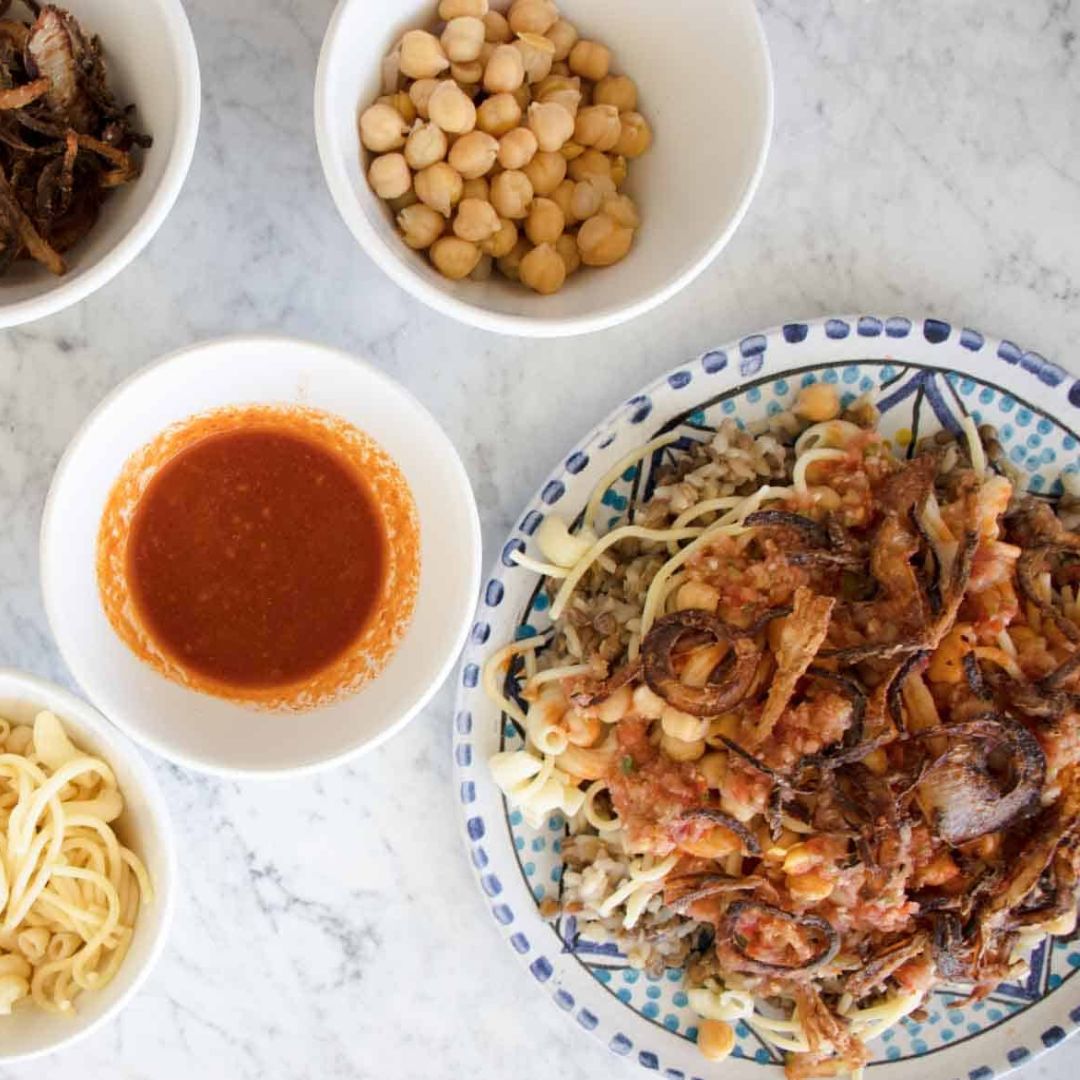 : Think tender lentils, chewy rice, crispy onions, and a boldly spiced tomato sauce fragrant with cumin and coriander. It’s hearty, wholesome, and easy to crave. That said, full disclosure: Koshari likes to keep you busy, and this recipe is more of a culinary project than a throw-it-together Tuesday dinner. The payoff is delicious, but after dirtying half your kitchen, you may find yourself doing what I do and heading straight to Koshari Mama next time. (Note: The recipe calls for a small amount of ghee. Swap in your favorite cooking oil or a plant-based butter such as Miyoko’s.)
Za’atar Chickpea Buddha Bowl: This bowl starts with my favorite foundation: pearled couscous (also known as Israeli couscous). Unlike its tiny cousin, pearled couscous is bigger, chewier, and actually gives you something to sink your teeth into. Despite its grain-like reputation, it’s pasta—which explains a lot. The couscous gets tossed in a bright, lemony vinaigrette and piled high with za’atar-roasted cauliflower and chickpeas, all finished with a generous drizzle of creamy tahini sauce. The result is a perfect collision of textures and flavors: nutty, tangy, savory, and deeply satisfying.
Red Lentil Soup with Lemon & Sumac : I’m a sucker for red lentil soup. It checks all the boxes: quick to make (no soaking required), packed with protein and fiber, and equally at home as a light meal or the opening act to a bigger feast. What I hadn’t realized was how dramatically a few simple additions could transform it. A squeeze of bright lemon and a dusting of tangy, ruby-red sumac wake up every spoonful, adding a punch of acidity that makes the flavors sing. One taste and the plain version suddenly feels a little underdressed. I’ve crossed over to Team Lemon-and-Sumac, and there’s no going back.
Druze Roasted Eggplant: Known as Mnazeleh, this cozy, spice-scented combination of roasted eggplant, tomatoes, and chickpeas is the kind of dish that quietly steals the show. Warm paprika, cinnamon, nutmeg, and cumin weave through every bite, creating layers of flavor. It’s a delicious introduction to Druze cuisine—a Middle Eastern culinary tradition that deserves far more attention than it gets. The first time I tasted Mnazeleh was at Gazala in New York City. I was immediately smitten. Naturally, I came home determined to recreate it. After a fair amount of searching, I landed on this recipe—and thankfully, it delivered everything I was hoping for. Deeply flavorful, wonderfully comforting, and proof that roasted eggplant remains one of life’s great pleasures.








Thanks for reminding us about Koshari Mama! We’ll try it soon!