

Suddenly, everyone is obsessed with their gut biomes, the health story of the moment. Be honest: Do you know what they are? I didn’t, beyond, “yogurt is good for them.”
So what are gut biomes, exactly? Trillions of bacteria, fungi, and other microbes living in your digestive tract right this moment, doing far more than anyone gave them credit for until pretty recently, perhaps because of the science-fiction-esque name. Gut biomes definitely need a re-branding campaign.
Think of your gut biomes as a densely populated internal ecosystem, made up of thousands of different bacterial species, all competing and cooperating inside you. Some of those species are helpful. Some are less helpful. And which ones thrive depends on what you feed them.
Your gut bacteria eat what you eat, and they reward or punish you accordingly. A gut biome fed poorly tends toward inflammation, the common thread running through an alarming number of chronic health problems.
Healthy gut biomes have been associated with better immune response, lower systemic inflammation, improved mood regulation (yes, your gut talks to your brain, it’s called the gut-brain axis and it’s a real thing), and better metabolic health.
Finally, gut biomes have been promoted beyond “fringe wellness” status. This is now mainstream medicine. Sadly, it’s the rare internist who is up-to-date on all of this; nutrition training in med school continues to be virtually non-existent. Doctors are trained to treat you after you get sick. It’s up to you to learn how to eat in a way that decreases the likelihood you’ll need to visit your doctor.
What Your Gut Biome Wants to Eat
Broadly, it wants variety: plants, and fermented foods. Diversity of plant foods specifically feeds diversity of gut bacteria, so the more different plants you eat across a week, the more different microbial species you’re supporting. And this is where fiber (one of my favorite topics!), and the humble bean quietly walk into the story.
Fiber is the primary food source for a huge portion of your healthy gut bacteria. It’s not just “the thing that keeps you regular,” though that is certainly a benefit. When gut bacteria break fiber down, they produce compounds that reduce inflammation and support your gut lining. And the uncomfortable truth for the Standard American Diet is that most people are getting, at most, half the fiber they need, because fiber only comes from one place: plants.
The good news: if you’re already eating plant-forward, you’ve basically been feeding your gut biome without a fancy name for it. Beans, lentils, whole grains, vegetables, fruit with the skin still on, that’s the whole toolkit. In other words, breakfast, lunch and dinner at my house.
5 Everyday ways to support your gut biome:
- Beans and lentils, non-negotiably, most days. One cup of lentils has around 15 grams of fiber, which is more than half of what adults need in a day. They’re also cheap. Chickpeas, black beans, split peas, rotate through whatever’s on sale, or has been languishing in your pantry.
- Don’t peel it if you don’t have to. Apple skins, potato skins, cucumber skins, that’s where a good chunk of the fiber (and flavor, honestly) lives. Caveat: given the amount of pesticides used by mega-farms (check out the Dirty Dozen), if you can afford it, I suggest organic, and/or a local farm, if you’re not going to peel.
- Whole grains over refined, most of the time. Brown rice instead of white, whole wheat pasta instead of regular, whole grain bread over white, real oats instead of instant flavor packets full of sugar. This isn’t about never eating white rice again. It’s about which one shows up on your plate most often.
- Ferment something. Kimchi, sauerkraut, and other fermented vegetables feed a different part of the gut-health equation, the actual bacterial diversity, not just the fiber they eat. Tempeh is at the top of my “favorite foods” list these days. Protein-rich, low-cal, and fermented. Trifecta!
- Add, don’t subtract, when you’re changing your diet. If you’re new to eating this much fiber, ease in. Going from low-fiber to high-fiber overnight is how people convince themselves fiber “doesn’t agree with them,” when really their gut just needed a couple of weeks to adjust. Add a little more each week, drink plenty of water, and give it time. The gas really does stop. (At least most of it).
Gut-Friendly Recipes to Get You Started
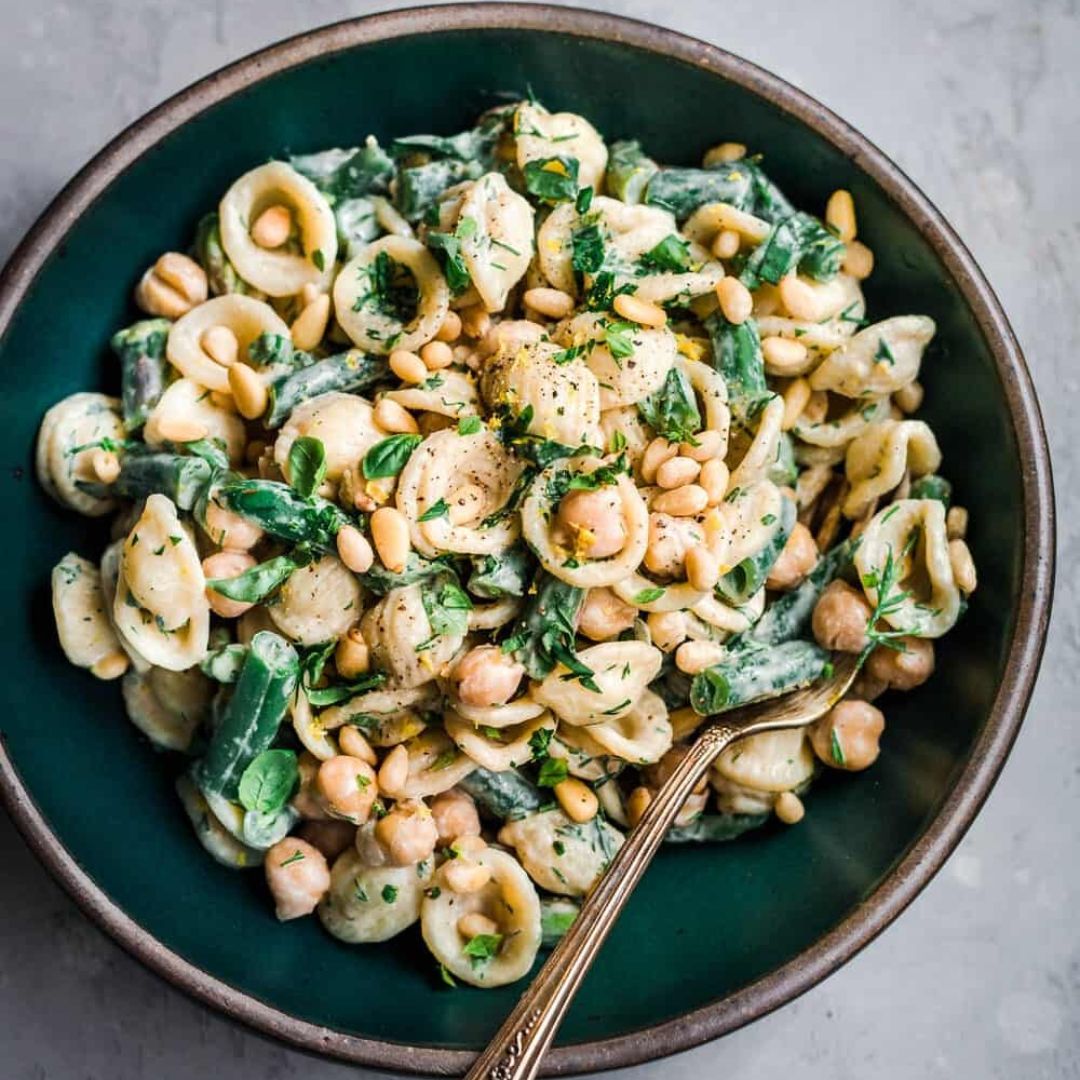 15-Minute Summer Pasta Salad: Farmers’ market haul, garden overflow, or fridge stragglers, whatever’s in season goes. The one non-negotiable: whole wheat pasta, because this dish is a love letter to your gut. Beyond that, cook lazy, eat happy.
Creamy Tomato Soup: Yes, canned tomatoes are the base, but onions, carrots, garlic, potatoes, and corn crash the party, giving your gut the variety it’s begging for. Swap in fresh corn on the cob instead of frozen and this soup goes from great to marry-me fabulous.
Italian Tempeh Crumbles: Crumbled, seasoned, charred until it looks and tastes like ground meat, but better. Toss it in chili and no one blinks. Pile it into a burrito with lettuce, tomatoes, and lime cashew crema and you’ll get a standing ovation. Fair warning: half the pan may not survive the trip from stove to plate.
 : Fiber-loaded chickpeas, pillowy potatoes, juicy cherry tomatoes, and a fistful of spinach for iron (and good karma). Spoon it over brown rice and consider it a thank-you note to your gut biome.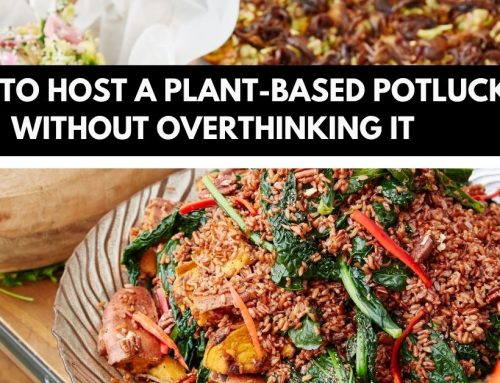






Thank you for this great article about gut biomes! I still don’t completely understand what it all means, yet I absolutely get the concept of good gut health, and how that equates to being regular, and being regular has everything to do with the kind of fuel I’m feeding my gut. Since eating a plant based diet 3 years running now, I’ve seen a significant change in my gut health, i.e., and most especially, my regularity. And let’s face it, when we’re not regular, we’re not happy campers. Love that you write about fermentation being a main character in the gut biome story line. In the last couple of months my husband and I — also a plant based convert — have been making “ginger bug” sodas. We were kombucha makers long before we were eating plant-based. We treated our starter mushrooms like pets in the kombucha making process. It’s a bit of work that we eventually gave up. Ginger bug — SUPER easy. Chopped up fresh ginger, sugar, filtered water in a jar on the counter. That’s it. Think sour dough starter, yet even easier. After a few days of fermentation add some of the ginger bug liquid (strain out the ginger) to a bottle of your favorite 100% juice, cap it well to keep the fizz, refrigerate. Tip: we use the Grolsh Beer, swing (flip) style bottles for really tight capping. We both take a “shot” of this a few times a day. Me, straight up. My husband likes to add his shot to club soda. Keep feeding the starter jar on the counter as you transfer the ginger bug into your soda bottles. Many Ginger Bug recipes out there to google. Both of us are reporting less bloating, easier going if you know what I mean. Yes, this is what we talk about after 42 years of marriage! Happy gut health, All — and Marla, you’re amazing for providing this great newsletter! Thank you!